The Vines, As Our Witness (to history)
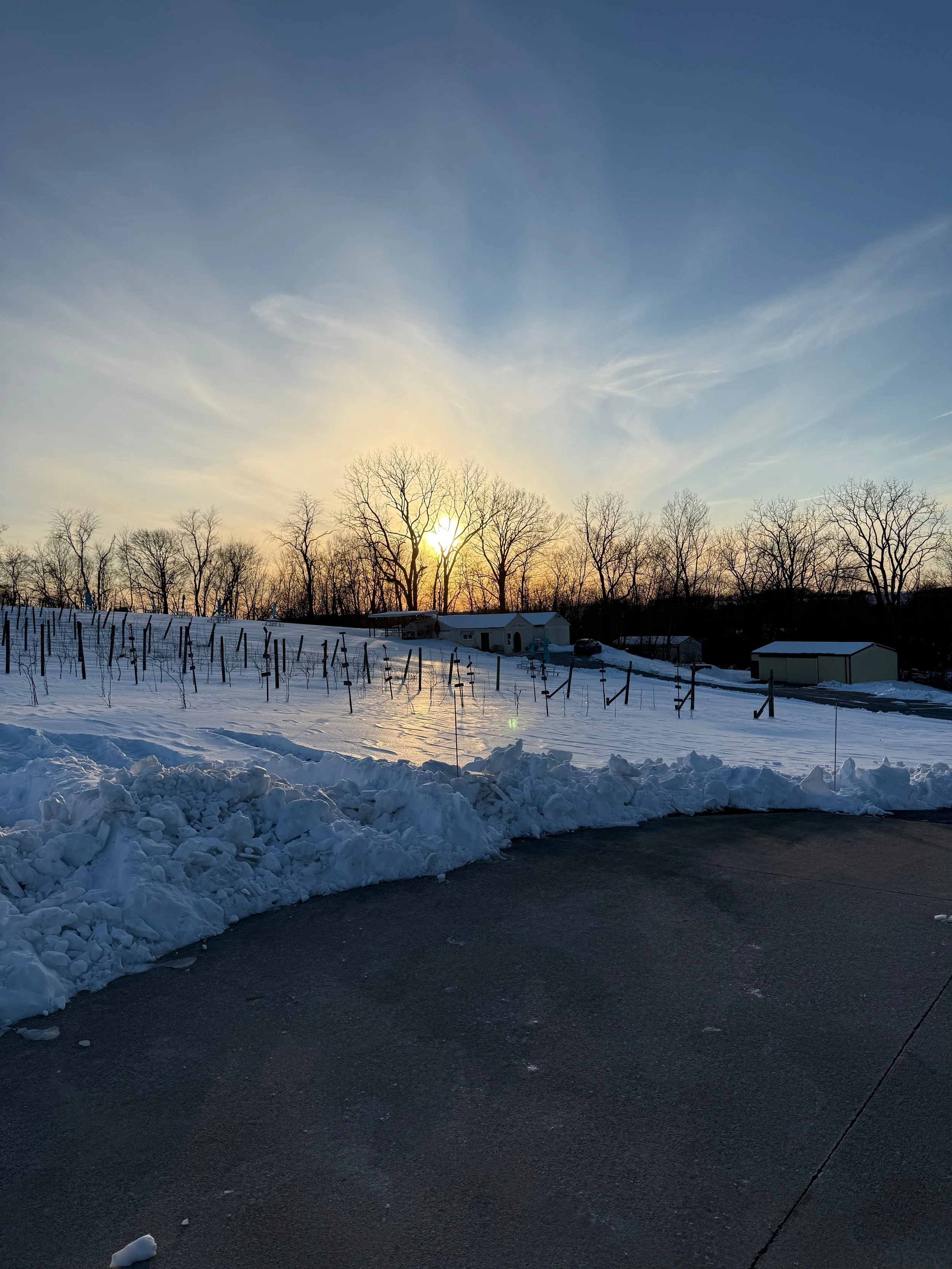
The vineyard has always been a comforting and serene place for me and my family. This was my grandfather’s slice of heaven as much as it was his haven. No matter where any of us are in the world, seldom does a sunset compare to the ones we experience at our vineyard.
Wine is made in the vineyard, which many often forget or fail to notice. A vineyard is a farm, too. We’re often the forgotten sector of agriculture because wine is considered “romantic” and an art more than it is a science. Even in the largest vineyards in the world, rows are hedged without a straggling leaf or tendril in sight and sprayed to Armageddon. But, even so, wines from those vineyards are considered an art rather than a science. It is a fact that without vine biology or wine chemistry, we can’t create artistic wines. And, on the other hand, a wine that is technically perfect can still lack a soul. It can be argued that, besides the mammoth sized wineries, vineyards and wineries are some of the most “hands-on” sectors of agriculture.
Our vines, like a majority of vineyards throughout the world, are tended to by humans, not machines. The person who planted each vine creates living history. Humans train grapevines for human consumption of grapes, not for the natural movements of the vine. This is true even for “biodynamic” or “natural” producers. You will never see a wine producer create commercial wines from grapevines that were found in a forest naturally climbing up a tree. Each vine is planted, trellised, and grown specifically for a purpose, “natural” or not. But, the key term here is that a person and labor is required.
As much as wine grapes reflect terroir, the sun, and the subsequent weather that ensues before grapes are to be picked, they are most definitely even more influenced by the people who tend to those vines. In most vineyards, each vine is pruned by a person, shoot-thinned by a person, guided into wires by a person, hedged by a person, crop-thinned by a person, sampled by a person, and harvested by a person. It is our responsibility as humans, once a grapevine is planted, to ensure that this finicky species survives and reproduces the way we want.
Without a person’s touch, we wouldn’t have a vine that would be able to thrive or produce a crop that is viable for wine. Who are these people who tend to this glorious plant that can live and produce for the span of an entire generation?
As I often look to the vineyard for answers and solitude, I can’t help but make comparisons of each of our growing seasons and weather with current events in the world. As a winemaker, I can recall each wine based on the vintage (weather) and chemistry. That, in turn, allows me to remember the world events from that specific year. I can’t help but be reminded of a producer in Loire Valley who wrote “victoire” on the corks of their 1945 vintage, signifying when WWII ended and the allies prevailed. What will happen for us in 2026 and beyond? Time will tell.
The skies around us have seemed to illuminate with fire, even in the frigid temperatures ongoing in February.
Our vineyard is under snow and ice that is so thick a person can walk on the surface of the snow without falling in. Even with subfreezing temperatures, we hope that the blanket of snow will insulate each vine so it can survive through the winter. It’s at this time of the year that all we can do is wait. And at some point, the temperatures will warm and the veil of ice will melt, and we will be able to assess the winter’s damage.
Within the next couple of months, in the spring, buds on each vine will break and shoots will rise. Signs of life will emerge in the vineyard and the growing season will begin. This is all because of a person—of the people who ensure each vine is postured to thrive and each cluster has the ability to make fine wine, so we too, as humans, can look back and learn from what was witnessed in the year 2026.